Table of Contents
Mean Time to Restore (MTTR): Definition and Calculation
Understand how LinearB measures Mean Time to Restore, how recovery windows are calculated, and which incident signals are used to reflect real recovery time.

Table of Contents
MTTR (Mean Time to Restore) measures the average time it takes to recover from a production failure. In LinearB, MTTR is calculated based on how long a production incident remains unresolved, helping teams understand the speed and effectiveness of their recovery process.
Summary
- MTTR measures the average recovery time from production failures.
- By default, LinearB calculates MTTR using the In Progress lifecycle of production bugs.
- You can customize which issues count as incidents and which timestamps are used.
- MTTR can be viewed at both the organization and team levels.
- The Incident API can be used to report incidents from any system.
Where to view MTTR
You can find the MTTR metric in the Metrics section, under the Project Management dashboard.
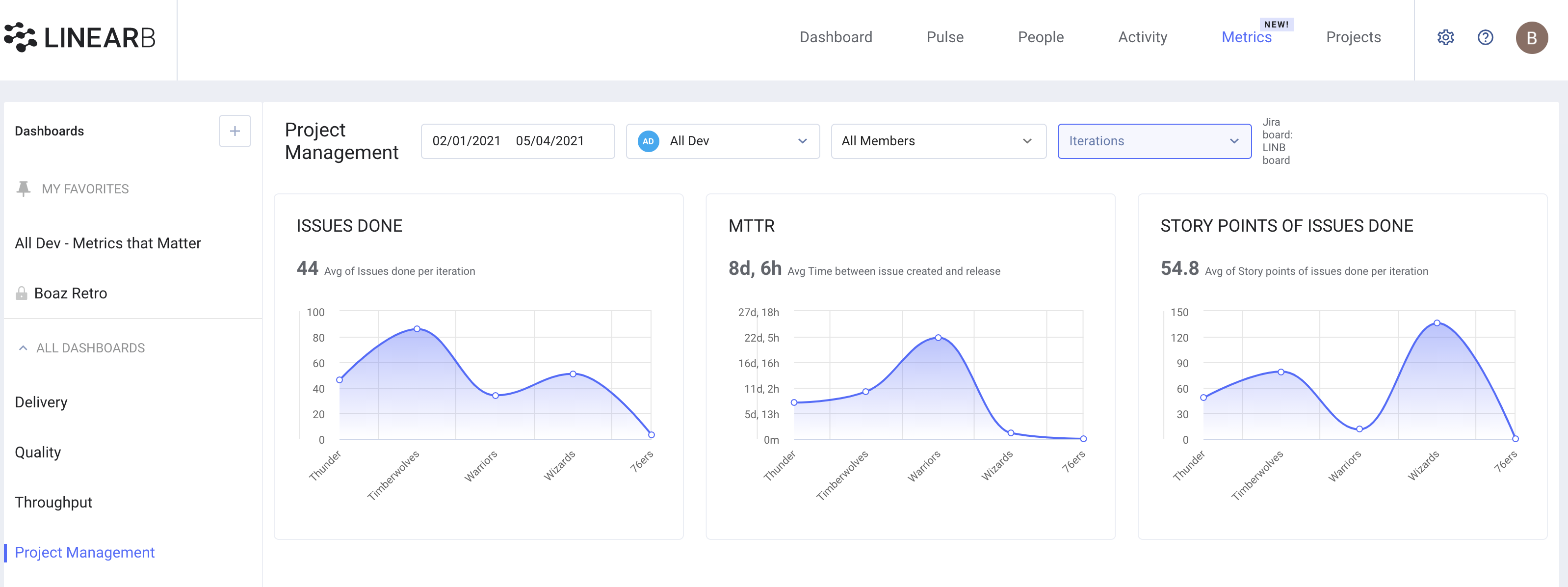
How MTTR is calculated
By default, LinearB measures MTTR as the time between:
- The moment a production issue enters the In Progress state
- The moment it exits the In Progress state
Each qualifying incident contributes to the average recovery time shown in the MTTR metric.
Customizing MTTR start and end times
LinearB allows you to control which timestamps define the MTTR duration. Instead of relying on status transitions, you can use custom fields that contain a date and time (timestamp).
By default:
- Start: Issue enters In Progress
- End: Issue exits In Progress
You can override this behavior by selecting timestamp fields for:
- Incident start time
- Incident end time
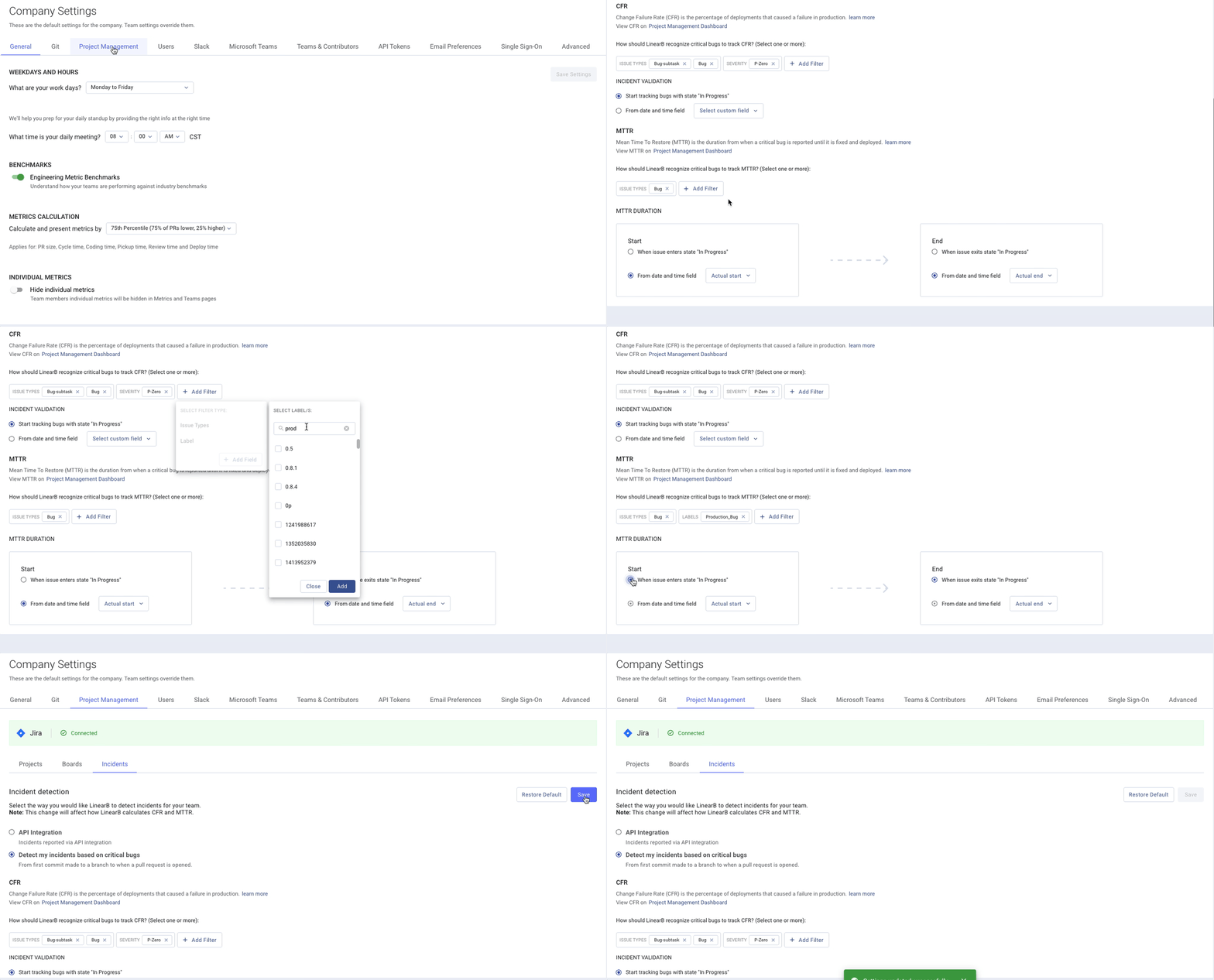
These settings are available under MTTR Duration in the incident configuration panel.
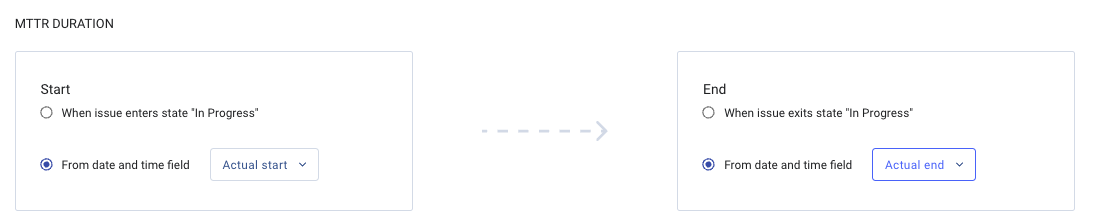
You can also access this configuration by clicking the gear icon next to the MTTR widget in your metrics dashboard.
Customizing MTTR start and end times
LinearB allows you to control which timestamps define the MTTR duration. Instead of relying on status transitions, you can use custom date fields.
By default:
- Start: Issue enters In Progress
- End: Issue exits In Progress
You can override this behavior by selecting custom date fields for:
- Incident start time
- Incident end time
These settings are available under MTTR Duration in the incident configuration panel.
You can also access this configuration by clicking the gear icon next to the MTTR widget in your metrics dashboard.
Using the Incident API for MTTR
LinearB’s Incident API allows you to report production incidents from any external system, even if it is not directly integrated with LinearB.
Incidents reported through the API are included in MTTR calculations as long as they contain valid start and end timestamps.
Learn more about the Incident API:
Viewing MTTR by team
LinearB can calculate MTTR at the team level by combining:
- The organization-wide incident definition
- The project management boards associated with each team
Team-level MTTR reflects only incidents mapped to that team’s configured boards.
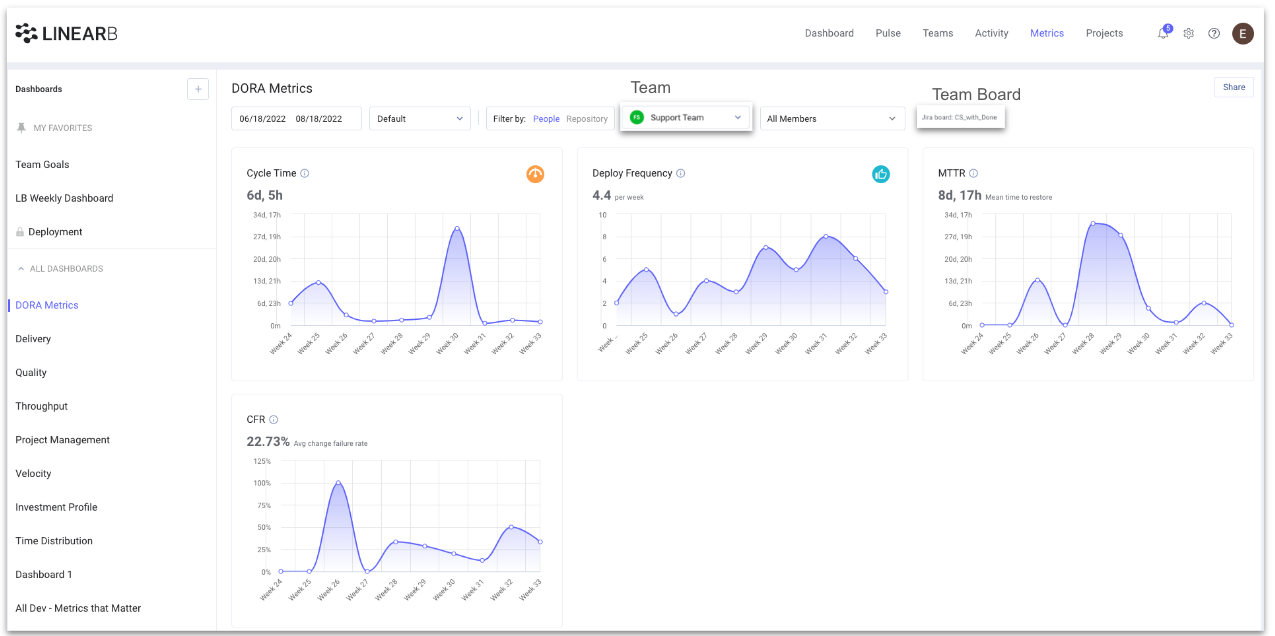
To ensure accurate results:
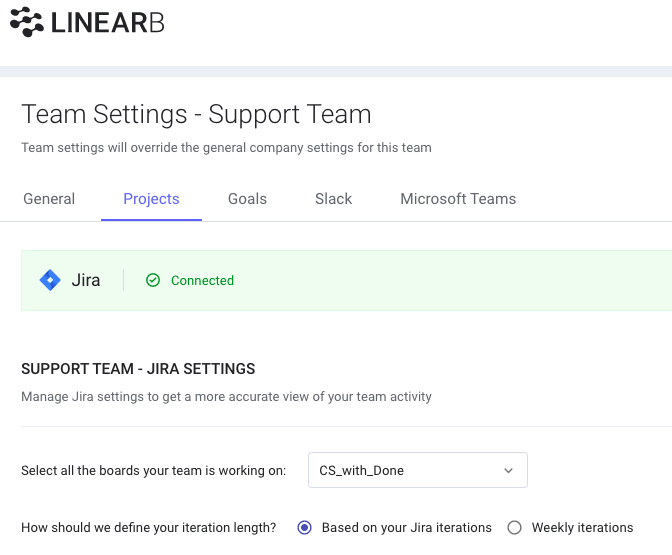
- Go to Team Settings → Projects.
- Verify the team is connected to the correct project management boards.
How did we do?
MTTR (Mean Time to Recovery) Metric
Reducing Change Failure Rate Through Smaller Deployments